
Everything you need to know about Brazilian Jiu-Jitsu before your first class — the history, what to expect, Gi vs No-Gi, the belt system, and why The Garden MMA is the place to start.
What is Jiu-Jitsu? A Complete Beginner's Guide
You've probably heard the name — maybe from a friend who won't stop talking about it, maybe from watching UFC, or maybe you just Googled "martial arts near me" and it kept coming up. Either way, you're curious. Good. Let me break it down for you.
I'm Keren, and I run The Garden MMA in Haifa. I've watched hundreds of people walk through our doors with the same question you have right now: What is jiu-jitsu, and is it for me? The short answer is yes. The longer answer is what this guide is for.
A Brief History of Brazilian Jiu-Jitsu
Jiu-jitsu's story starts in Japan, where traditional jujutsu techniques — joint locks, throws, and pins — were developed by samurai as a way to fight when weapons were unavailable. In the early 1900s, a Japanese martial artist named Mitsuyo Maeda traveled to Brazil, where he befriended the Gracie family and began teaching them his art.
The Gracies, particularly Hélio Gracie, adapted and refined what they learned. Hélio was smaller and less athletic than his brothers, so he focused on leverage, timing, and technique over strength and explosiveness. This became the foundation of Brazilian Jiu-Jitsu — an art built on the principle that a smaller, weaker person can defend themselves against a larger opponent using proper technique and positioning.
That principle changed combat sports forever. When Royce Gracie entered the first UFC tournament in 1993 and submitted opponents twice his size, the world paid attention. Today, BJJ is one of the most widely practiced martial arts on the planet, with millions of practitioners from every background imaginable.
But here's the thing — you don't need to care about any of that history to benefit from training. It's just good to know that this art was literally designed for people who aren't the biggest or strongest person in the room.
What to Expect in Your First Class
This is usually where the nerves kick in, so let me be straight with you: your first class will be challenging, a little confusing, and probably the most fun you've had exercising in years.
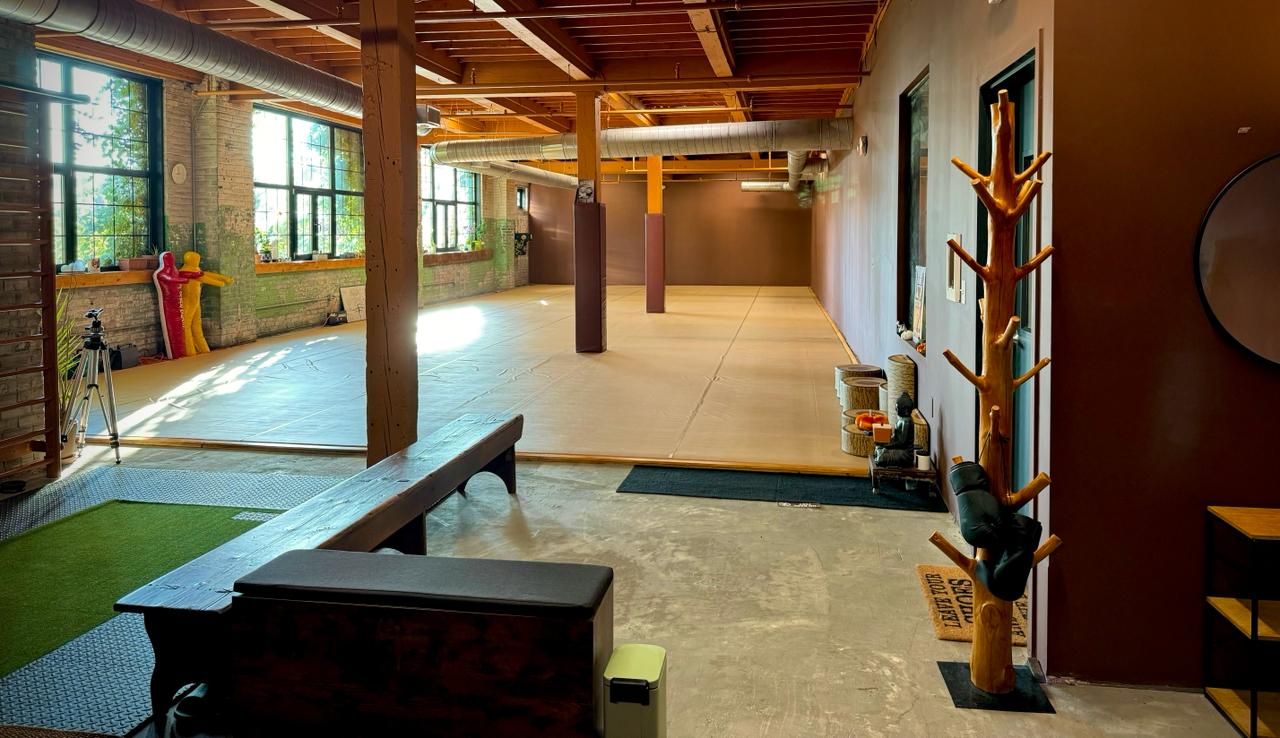
Here's how a typical class at The Garden flows:
Warm-up (10–15 minutes). We start with movement drills that build the coordination you'll need on the mat — hip escapes (shrimping), forward and backward rolls, bear crawls, and partner drills. It's not a bootcamp. The warm-up is designed to prepare your body for the specific movements of jiu-jitsu, not destroy you before the class even starts.
Technique instruction (20–30 minutes). The coach demonstrates a technique or sequence, breaks it down step by step, and then you drill it with a partner. As a beginner, you'll be paired with someone experienced who can guide you. Nobody expects you to remember everything on day one — the goal is to feel the movements and start building muscle memory.
Positional sparring or live rolling (15–20 minutes). This is where you get to try what you've learned against a resisting partner. For new students, this usually means positional rounds — starting from a specific position and working on escapes or submissions — rather than full sparring right away. When you are ready for live rolling, it's always controlled and supervised. You can sit out any round you want. No pressure, no ego.
Etiquette basics: Bow when you step on the mat. Keep your nails trimmed. Tap early and tap often — tapping is how you signal submission, and it's respected, not shameful. Everyone taps. White belts tap. Black belts tap. It's part of the learning process.
Benefits of Training Jiu-Jitsu
People come for different reasons and stay for different reasons. Here's what I've seen happen consistently with members who stick with it.
Physical fitness that actually transfers. BJJ works your entire body in ways that a gym routine can't replicate. You'll develop functional strength, flexibility, cardiovascular endurance, and body awareness. After a few months of consistent training, everyday physical tasks feel easier. You'll move differently — more efficiently, more confidently.
Mental resilience. On the mat, you're constantly solving problems under pressure. Someone has you pinned, and you need to figure out how to escape — right now, with their weight on your chest. That kind of forced problem-solving under stress builds a mental toughness that shows up in every area of your life. Members tell me they're calmer at work, more patient with their kids, less reactive to the small stuff.
Practical self-defense. Jiu-jitsu was designed for real confrontations. The techniques you learn — controlling someone on the ground, escaping bad positions, applying submissions — work against larger, untrained opponents. You'll never need to use them, hopefully. But knowing you could changes how you carry yourself.
Community. This is the one people don't expect and the one that keeps them coming back. Your training partners become some of the closest people in your life. You trust each other with your bodies every session. You celebrate each other's promotions, show up when someone is struggling, and build bonds that go far beyond the gym. At The Garden, that sense of team isn't accidental — it's the foundation of everything we do.
Gi vs No-Gi: What's the Difference?
If you start researching BJJ, you'll immediately run into this distinction. Here's the simple version.
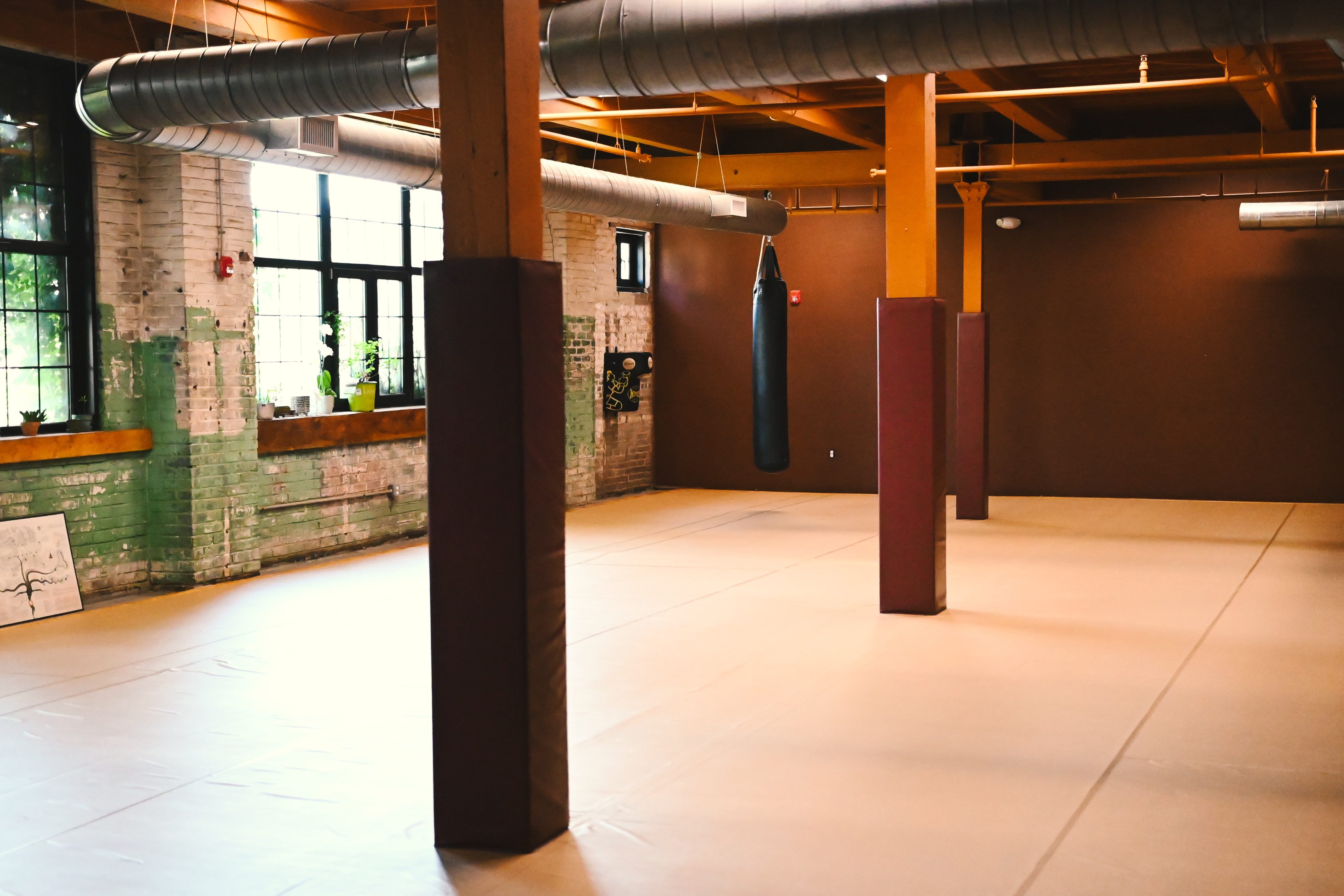
Gi (kimono) training uses a traditional uniform — a heavy cotton jacket and pants with a belt. The Gi adds grips. You can grab your opponent's collar, sleeves, and pants to control them, sweep them, or set up chokes. This slows the game down and rewards precision, patience, and technical detail. It also translates directly to self-defense situations, since most people in daily life wear clothes you can grip.
No-Gi training uses rash guards and shorts — no fabric to grab. This makes the action faster and more athletic. You rely on body locks, underhooks, and wrestling-style ties to control your opponent. The modern No-Gi game includes a heavy emphasis on leg locks, wrestling, and dynamic transitions that have revolutionized competitive grappling over the last decade.
Which should you train? Both. They complement each other beautifully. Gi training teaches you to be precise and technical. No-Gi training teaches you to be fast and adaptable. At The Garden, we run dedicated classes for both throughout the week, and we encourage every student to train in both styles. Your jiu-jitsu will be better for it.
The Belt System
BJJ uses a colored belt system to mark your progress:
- White belt — Where everyone starts. You're learning the fundamental positions, basic submissions, and how your body moves on the ground.
- Blue belt — You understand the core game and can apply techniques against resisting opponents. This typically takes 1–2 years of consistent training.
- Purple belt — You're developing your own style and can troubleshoot problems in real time. Often called the "fun belt" because you're skilled enough to play.
- Brown belt — Your technique is refined and your game has depth. You're polishing details and preparing for the highest level.
- Black belt — Mastery of the fundamentals and a deep, personal game. This typically takes 8–12 years of dedicated training. It's not the end — it's a new beginning.
Within each belt, you earn stripes (up to four) that mark incremental progress. At The Garden, promotions are based on demonstrated skill, consistency, and character — not just time spent. When you earn a stripe or a new belt here, you know it's real because you can feel the difference on the mat.
Don't worry about belts when you start. They'll come. Focus on showing up, learning, and enjoying the process. The belt system is a map, not the destination.
Recovery and Wellness
Training hard is only half the equation. Your body needs time and tools to recover so you can keep showing up — and keep improving — week after week.
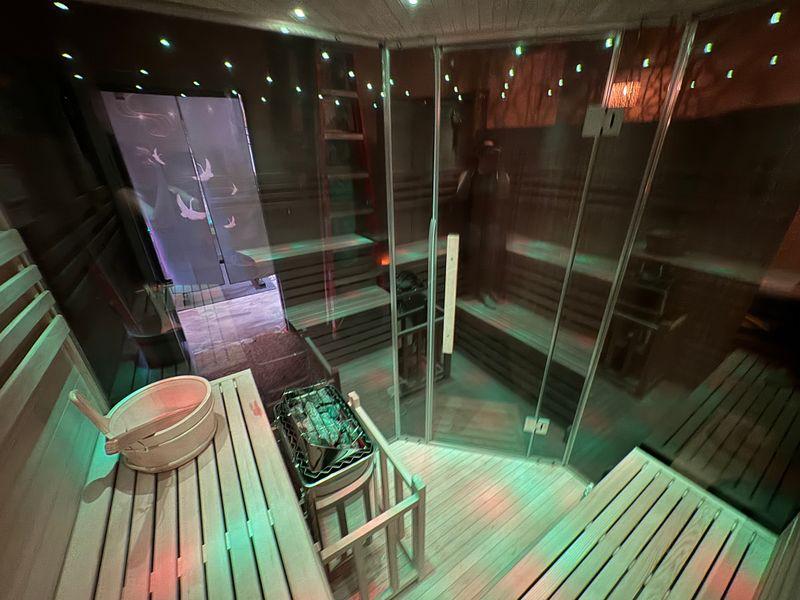
At The Garden, recovery isn't an afterthought — it's built into our facility. Our sauna is available for members to use after training sessions. Regular sauna use helps with muscle soreness, improves circulation, promotes joint health, and provides the kind of deep relaxation that balances out the intensity of the mat. Many of our members make it part of their routine: train hard, then decompress.
Beyond the sauna, we coach our members on training smart. That means understanding the difference between productive discomfort and injury risk, learning when to go hard in sparring and when to flow, and listening to your body. The members who last longest in this sport — and get the furthest — are the ones who treat recovery as part of their training, not something separate from it.
Why Train at The Garden MMA?
There are other gyms. So why here?
Because we built this place for people, not just athletes. Whether you're a complete beginner who's never done anything physical, or an experienced grappler looking for a new home, you'll find a team that welcomes you and pushes you to grow.
Our classes are structured around a progressive curriculum that builds skills systematically — not random technique-of-the-day classes. Our coaches are invested in your development. And our community is the kind of environment where people genuinely care about each other's progress.
The Garden isn't just a gym. It's a training community that takes the art seriously and takes care of its people.
Ready to Start?
If you've read this far, you're already thinking about it. Don't overthink it. You don't need to be fit. You don't need experience. You don't need to know anything about jiu-jitsu. You just need to show up.
We offer a $35 Day Pass class where you'll experience a real session — warm-up, technique, and the opportunity to try some live training if you're comfortable. No sales pitch. No pressure. Just come see what it feels like to step on the mat and learn something that could change your life.
Book your $35 Day Pass class and come see what The Garden is about.
Free BJJ Beginner's Guide
Positions, etiquette, training tips — everything for your first class.